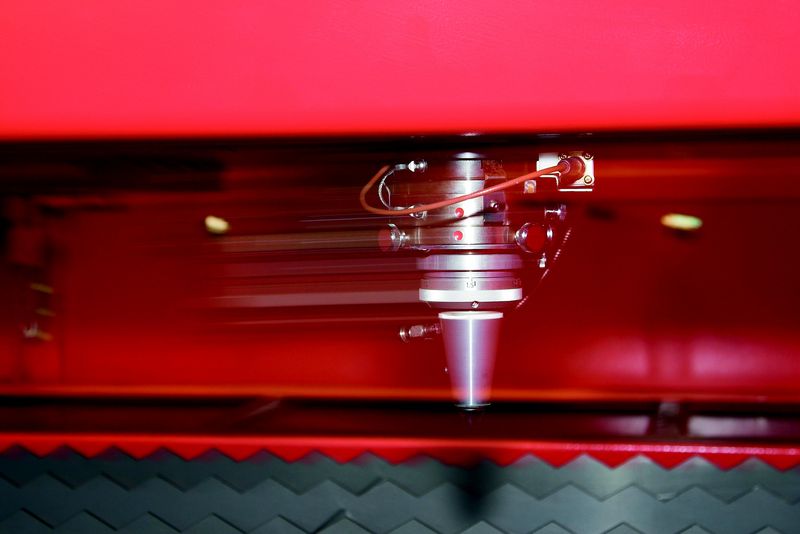
The QUATTRO is one of the most flexible, efficient and compact lasers on the market. Many metal working companies have a large number of components to manufacture but only need to produce one or two at a time. Ease of use, plus low operating costs make the QUATTRO the ideal solution for low volumes, without forgoing precision and quality.
This machine is no longer available.
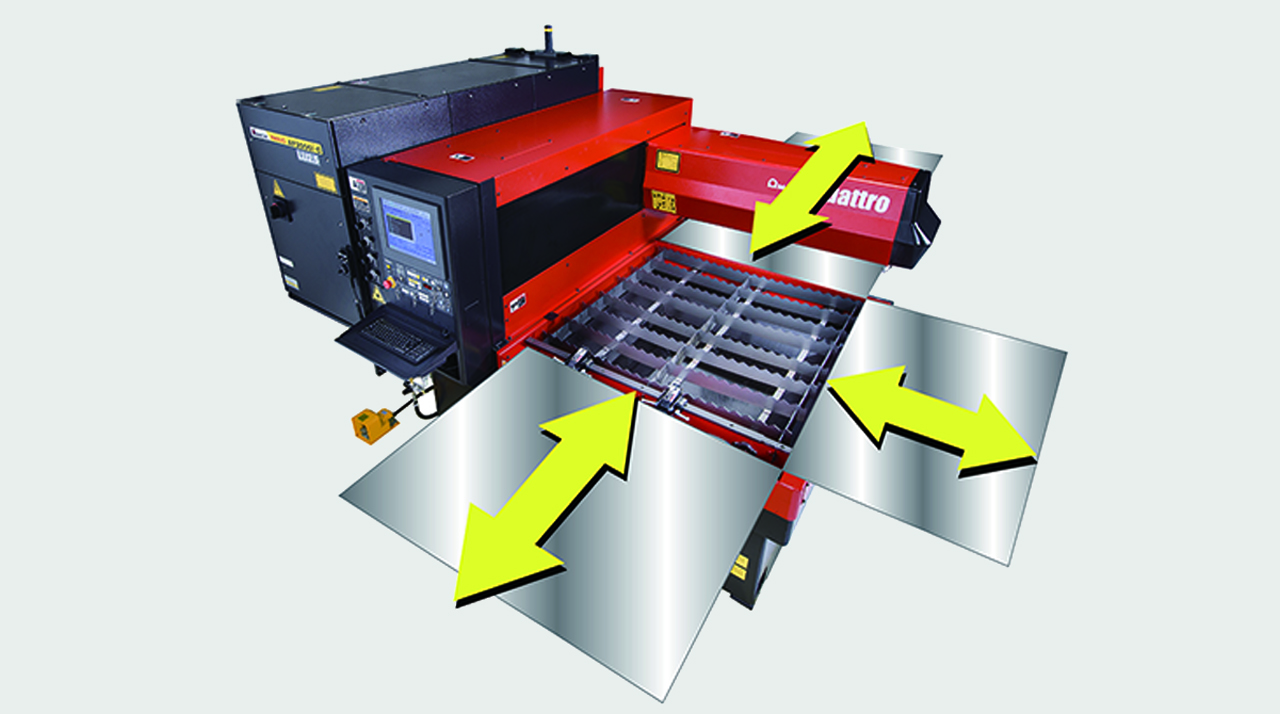
FULL ACCESS TO THE CUTTING AREA:
The three accessible sides of the QUATTRO laser facilitate sheet metal loading and unloading. Large-sized sheets which are bigger than the work area can also be processed, repositioning them manually.
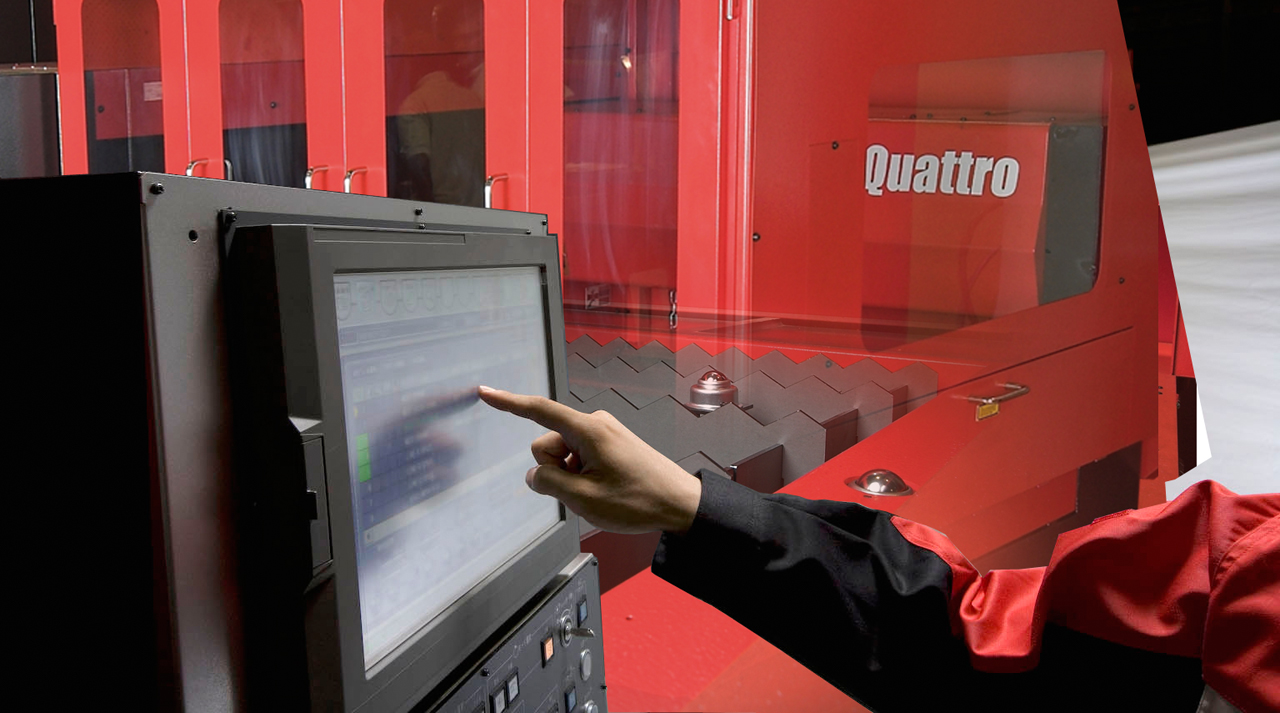
COMPACT STRUCTURE:
With a footprint of just 6.4 m2, the QUATTRO is AMADA's smallest laser. The oscillator and numerical control are contained within the machine to maintain its extremely compact size.
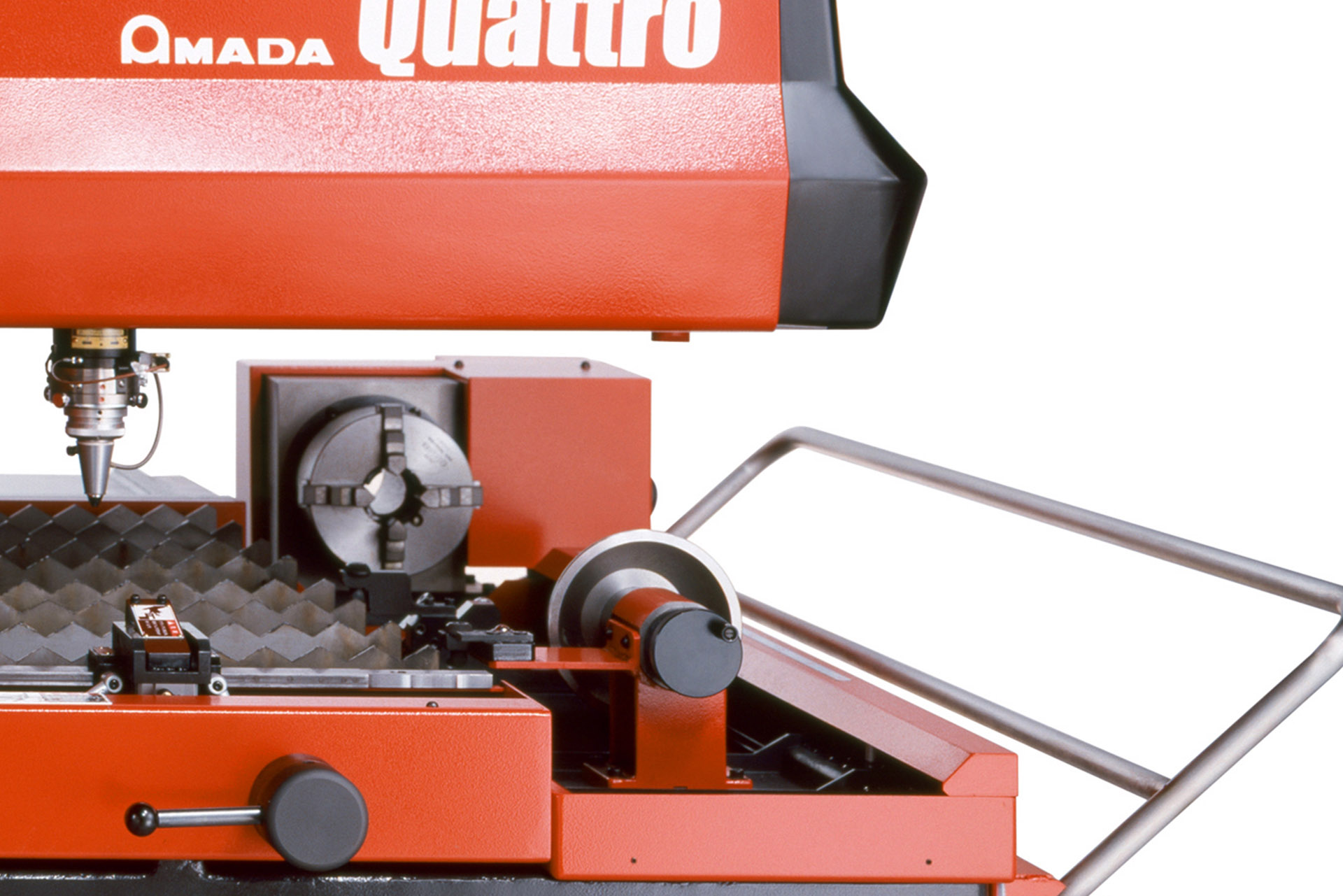
DIVERSIFIED PROCESSING:
With the QUATTRO, not only sheet metal but rectangular and square tubes can be processed, providing even greater flexibility. (Option)
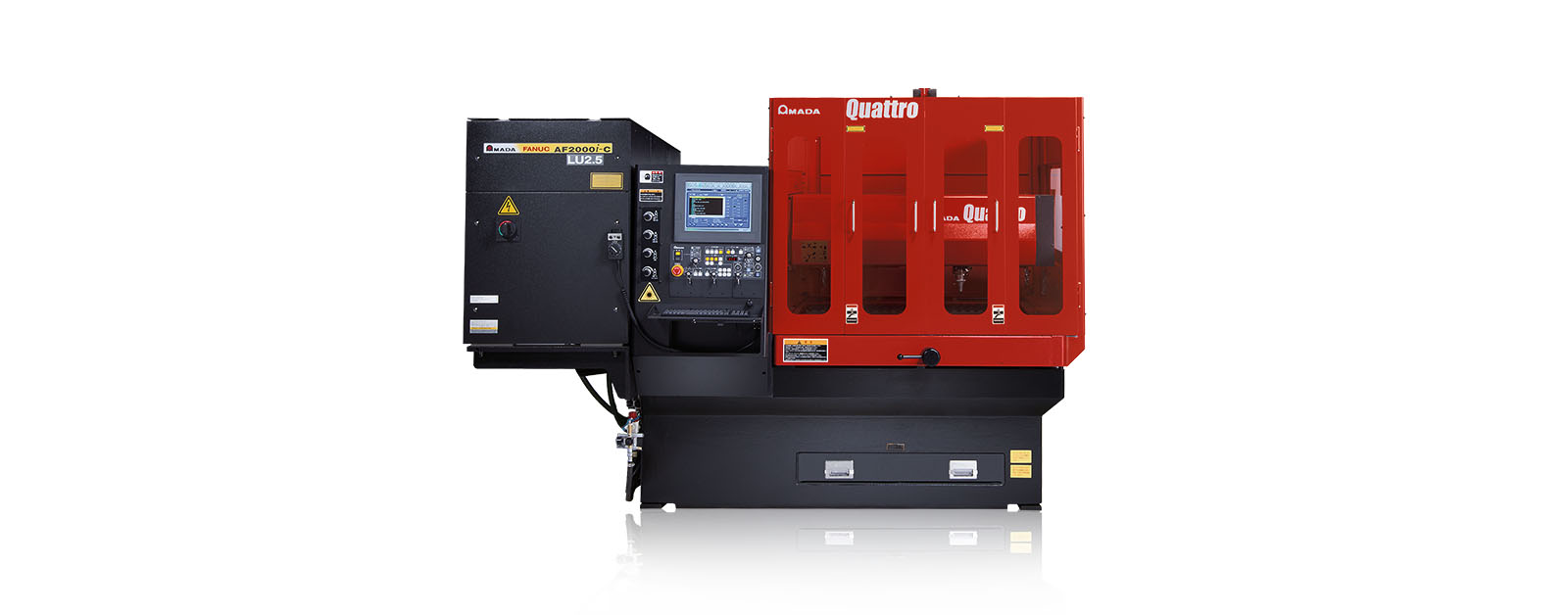
FULL ACCESS TO THE CUTTING AREA:
The three accessible sides of the QUATTRO laser facilitate sheet metal loading and unloading. Large-sized sheets which are bigger than the work area can also be processed, repositioning them manually.
COMPACT STRUCTURE:
With a footprint of just 6.4 m2, the QUATTRO is AMADA's smallest laser. The oscillator and numerical control are contained within the machine to maintain its extremely compact size.
DIVERSIFIED PROCESSING:
With the QUATTRO, not only sheet metal but rectangular and square tubes can be processed, providing even greater flexibility. (Option)
| QUATTRO | QUATTRO | |
|---|---|---|
| Laser power (W) | 1000 | 2500 |
| Machine type | CO₂ flying optic laser | CO₂ flying optic laser |
| Working range X x Y (mm) | 1250 x 1250 | 1250 x 1250 |
| Working range Z-axis (mm) | 100 | 100 |
| Table loading weight (kg) | 80 | 160 |
Material thickness (max.)*: | ||
| - Mild steel (mm) | 6 | 12 |
| - Stainless steel (mm) | 2 | 5 |
| - Aluminium (mm) | 1 | 4 |
Dimensions: | ||
| Length (mm) | 2900 | 2950 |
| Width (mm) | 2450 | 2450 |
| Height (mm) | 2160 | 2160 |
| Weight (kg) | 3750 | 4150 |
* Maximum thickness value depends on material quality and environmental conditions
Technical data can vary depending on configuration / options
Please contact us for more details and options or download our brochure

For your safe use.
Be sure to read the user manual carefully before use.
When using this product, appropriate personal protection equipment must be used.

Laser class 1 when operated in accordance to EN 60825-1
The story of the Rosetta Stone CD-ROM is one of passion, technological revolution, and a major pivot that marked the end of an era in educational software. This article explores the rich history, groundbreaking features, and lasting legacy of this iconic product.
: The modern version is accessible via web browsers, iOS, and Android devices.
Early versions of speech recognition technology allowed users to practice pronunciation and receive feedback [5.4].
If you already own the CDs or are considering buying them second-hand, be aware of significant technical hurdles: rosetta stone cd
The Rosetta Stone CD-ROM stands as an icon of early consumer software history. It successfully bridged the gap between dry, academic textbooks and the hyper-connected digital learning tools we enjoy today.
A standard Rosetta Stone CD-ROM software suite usually included several components:
The pricing of the Rosetta Stone program varies depending on the version and the level of subscription. The program offers a range of subscription options, including a free trial, a monthly subscription, and a lifetime subscription. The story of the Rosetta Stone CD-ROM is
This public link is valid for 7 days and shares a thread, including any personal information you added. This link or copies made by others cannot be deleted. If you share with third parties, their policies apply. Can’t copy the link right now. Try again later.
There is a tactile joy to the that the cloud cannot replicate. Opening the thick cardboard box, flipping through the learner's guide, and physically inserting Disc 3 to unlock "Unit 12: Shopping and Transactions" creates a sense of commitment. In a world of ephemeral swipes and disappearing stories, the CD demands focus.
By the early 2010s, the technological landscape shifted rapidly beneath Rosetta Stone's feet. Several factors converged to bring an end to the physical CD-ROM era. The Mobile App Explosion A standard Rosetta Stone CD-ROM software suite usually
While the physical CD-ROM was revolutionary for its time, it faced limitations in portability and real-time updates. The rise of mobile technology and high-speed internet eventually led Rosetta Stone to phase out physical discs in favor of mobile apps and web-based platforms. These modern iterations offer enhanced features like live tutoring and "Reset Progress" options that were difficult to implement on static media. How Does Rosetta Stone® Work?
The story of the Rosetta Stone CD-ROM begins with its founder, Allen Stoltzfus. After finding success learning German through immersion but struggling with a traditional classroom setting for Russian, Stoltzfus envisioned a way to use emerging computer technology to simulate a natural, immersive learning environment.
As she progressed through the program, Emily began to notice a significant improvement in her language skills. She could understand and respond to questions from native speakers, and even started to think in French. She watched French movies with English subtitles, read French books, and even started to listen to French music.
Computer manufacturers stopped building optical disc drives into laptops to make devices thinner and lighter. Apple dropped the disc drive from the MacBook Pro in 2012, and Windows PC manufacturers quickly followed suit. Without a disc drive, the physical Rosetta Stone CDs became useless plastic circles unless users bought awkward external hardware. High Barrier to Entry